

What is Systemic Mastocytosis?
Systemic Mastocytosis (SM) is a rare condition in which too many mast cells build up in different parts of the body. Mast cells are a normal part of the immune system and help protect the body by releasing chemicals such as histamine during allergic reactions and infections.
In Systemic Mastocytosis, these extra mast cells can accumulate in the bone marrow, skin, gastrointestinal tract, liver, spleen, and other organs. Because there are more mast cells than normal, when the mast cells are triggered large amounts of chemical messengers are released. This can cause large reactions. Mast cells in mastocytosis can be set off by known or unknown triggers.
The severity of symptoms varies from person to person. Many people have mild symptoms that can be managed with medication, while others may experience serious reactions, such as anaphylaxis, or have ongoing symptoms that are still not well-managed with medication and trigger avoidance.
Download our Systemic Mastocytosis factsheet
Download Now
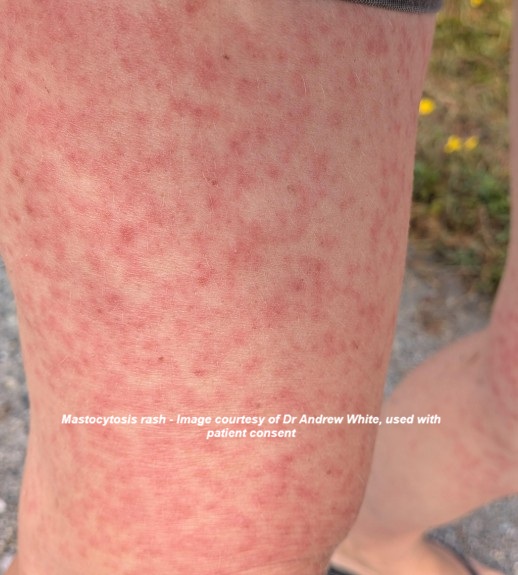
Symptoms of Systemic Mastocytosis?
Systemic Mastocytosis can cause a wide range of symptoms, including:
- Flushing (redness and warmth of the skin)
- Itching or hives
- Abdominal pain, nausea, vomiting, or diarrhoea
- Dizziness or fainting
- Rapid heartbeat
- Bone or muscle pain
- Fatigue
Diagnosing Systemic Mastocytosis
Systemic Mastocytosis is usually diagnosed through:
- blood tests – including a full blood count (FBC), measuring blood tryptase levels, and sometimes a genetic test for the common mast cell mutation called c-kit.
- a bone marrow biopsy test – a diagnosis of systemic mastocytosis is usually made by finding changes on a bone marrow biopsy.
- an ultrasound scan to look for enlargement of the liver and spleen.
- a DEXA scan to measure bone density.
What is the relationship between Systemic Mastocytosis and Anaphylaxis?
Research suggests that nearly half of people living with systemic mastocytosis will experience serious allergic type reactions called anaphylaxis at some point.
Anaphylaxis (ana-fil-ax-is) is a serious, life-threatening allergic or mast cell activation reaction that develops rapidly and requires immediate treatment. In a person with systemic mastocytosis, they may experience anaphylaxis because the large number of mast cells release massive amounts of histamine and other inflammatory chemicals.
Anaphylaxis in systemic mastocytosis may occur in response to what we often think of as typical allergens but may also happen in response to things that are not usual causes such as:
- Insect stings (wasps, bees or even jellyfish)
- Medical procedures
- Certain medications
- Stress
- Poor sleep patterns and sleep deprivation
- Temperature changes
- Exercise
- Drinking alcohol
- Sometimes without any obvious trigger
Symptoms of Anaphylaxis
The term for this more serious reaction is anaphylaxis (pronounced ana-fil-ax-is).
Most healthcare professionals consider an allergic reaction to be anaphylaxis when there are one or more ABC symptoms present as part of a reaction.
In extreme cases there could be a dramatic fall in blood pressure. The person may become weak and floppy and may have a sense of something terrible happening. ABC symptoms may lead to collapse and unconsciousness and, on rare occasions, can be fatal.
-
 AIRWAY – swelling in the throat, tongue or upper airways, hoarse voice, difficulty swallowing
 -
BREATHING – sudden onset wheezing, breathing difficulty, noisy breathing, persistent cough
-
CIRCULATION – dizziness, feeling faint, sudden sleepiness, tiredness, confusion, pale clammy skin, loss of consciousness or collapse
Atypical anaphylaxis (not following the usual pattern of symptoms) in people with systemic mastocytosis
Anaphylaxis in people with Systemic Mastocytosis often involves low blood pressure (with dizziness, confusion, or collapse) without obvious airway or breathing problems, and without much rash or swelling. It is therefore critical to recognise this distinction in people with systemic mastocytosis when assessing for anaphylaxis, recognising that it may not be typical.
How can you reduce the risk of anaphylaxis
Although it is not always possible to prevent anaphylaxis, several measures can reduce the risk. Click Download Now below, to find out more.
Managing anaphylaxis and treating symptoms
Systemic Mastocytosis can cause unpredictable reactions, including anaphylaxis. It is therefore important to give you confidence to have an emergency plan in place and with you at all times.
If you experience mild allergic symptoms (without ABC symptoms), you may be prescribed antihistamine medicine that you take by mouth. If you are at higher risk of anaphylaxis you may be prescribed adrenaline devices to use in an emergency.
It’s important to know exactly how and when to use your prescribed adrenaline device. Healthcare professionals can show you how to use it, and there are also resources such as practice devices and videos on manufacturer websites.
Adrenaline options currently available on prescription in the UK include:
- Adrenaline auto-injectors (AAIs) – such as EpiPen and Jext.
- Intranasal adrenaline – EURneffy, a needle-free nasal spray.
With what is known currently, injectable adrenaline is preferable to intranasal adrenaline in people with systemic mastocytosis. Please speak to your health professional about treatment options and if you have any concerns.
You must carry two in-date forms of prescribed adrenaline at all times as a second dose
may be needed if symptoms do not improve after five minutes or get worse. People with systemic mastocytosis often need more than one dose of adrenaline, so you should always call an ambulance if you have anaphylaxis, even if you are responding to the adrenaline initially.
Key messages
-
Carry your two adrenaline devices at all times, if prescribed.
-
Use adrenaline immediately if anaphylaxis is suspected.
-
Always seek emergency medical care after using adrenaline.
-
Discuss an individual anaphylaxis action plan with your specialist.
-
Early recognition and prompt treatment of anaphylaxis can be life-saving.
-
Always tell healthcare providers that you have systemic mastocytosis before: Surgery, Dental procedures, Imaging tests involving contrast dye, Vaccinations (which are generally recommended), Being prescribed new medications, Some procedures may require special precautions or pre-medication and observation afterward
-
Have copies of recent test results, current medications with you at all times i.e. in your car, on your phone. (download the NHS App to have all medical information to hand).
Download our systemic mastocytosis factsheet
Download Now